
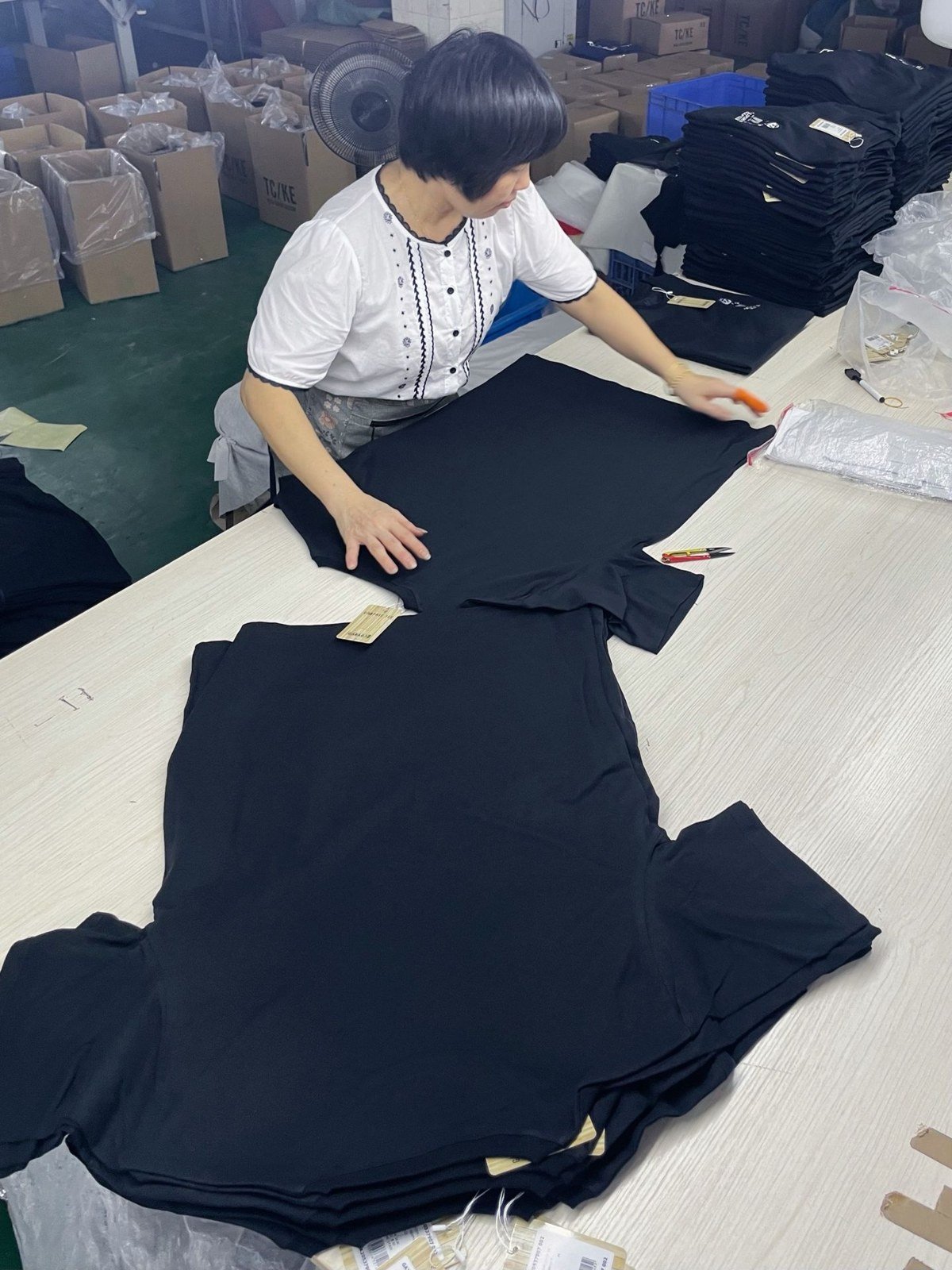
Define the purpose of this sample
A development sample may explore appearance, a fitting sample may test shape, and a later sample may confirm materials and details closer to production. Names and workflows vary, but each round should have an agreed purpose. Do not treat a fit-only sample as approval of every material and component.
On receipt, check the style, sample version and corresponding specifications. Measure key points using the agreed method and record the results instead of describing a garment only as slightly large or short.
Move from flat inspection to fitting
When laid flat, inspect symmetry, seams, collar, placket and hem. During fitting, review movement, shoulder and sleeve relationships and overall proportions. Record the wearer information and sample size so fit comments have context.
Review color, handle, decoration, trims and labels as well. If after-care assessment is required, use the agreed procedure and compare measurements and appearance. A review of the garment only in its newly received condition may miss an important requirement.
Make feedback actionable
A useful comment identifies the location, present condition and intended result. Specifying a revised sleeve-opening measurement is easier to implement than saying the sleeve should feel more comfortable. Use annotated photographs and consolidate comments from different reviewers into one instruction set.
Before approval, confirm that open issues are resolved. If temporary materials or replacement components remain, state the limits of the approval. Retain the approved sample, final specification and written decision so production has a clear reference.