
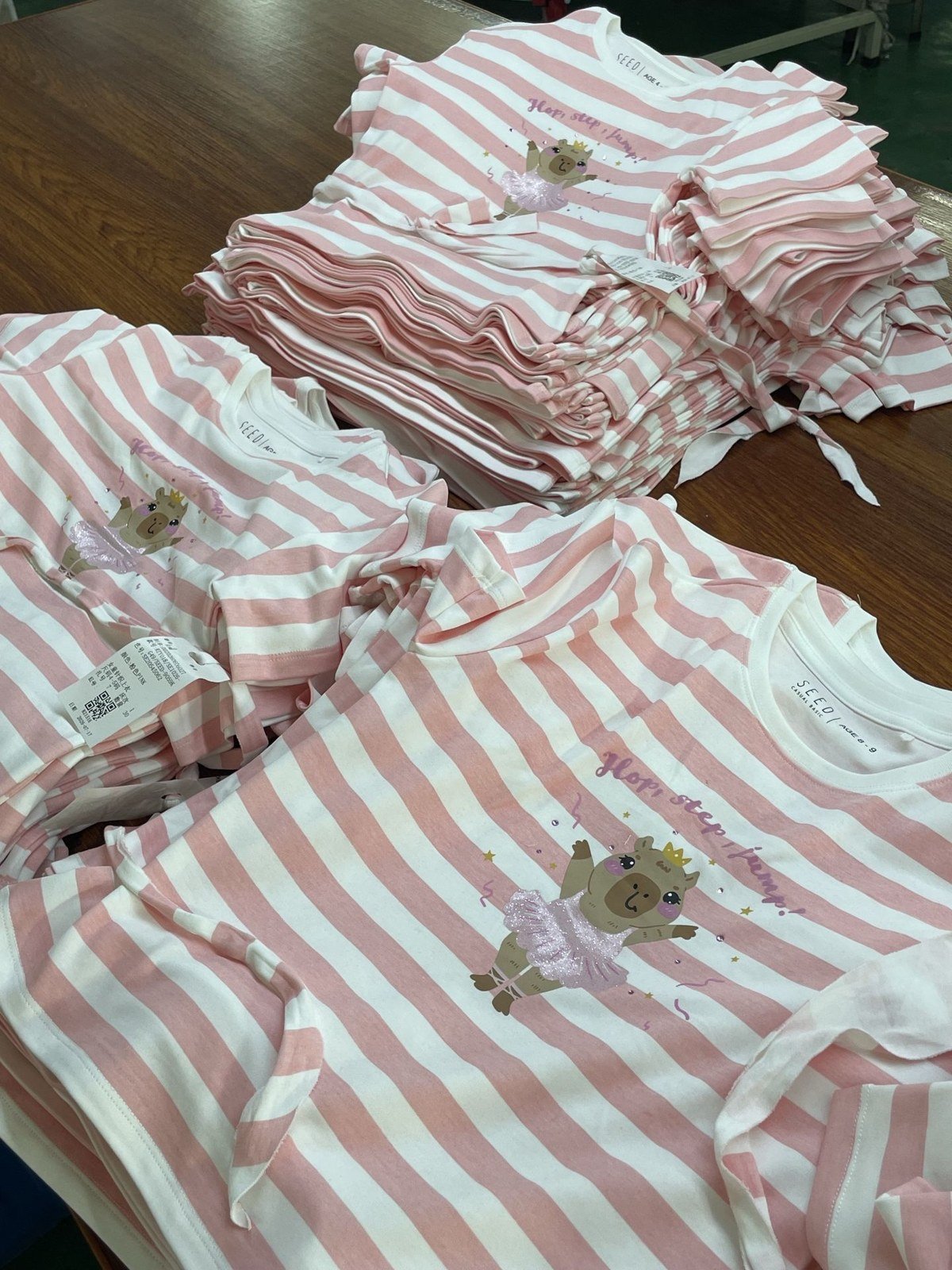
Cotton, polyester and wool are fiber names. Woven and knit are fabric structures. Keeping those two decisions separate makes it easier to explain the result you want to a clothing supplier.
Woven fabric: interlacing yarns
Woven fabrics are formed by interlacing warp and weft yarns. Depending on the weave, yarns and finishing, they can be crisp, fluid, light or substantial. Common uses include shirts, trousers, denim and jackets. The structure often gives good shape definition, but a lightweight woven fabric should not be assumed to behave like a stiff shirting.
Knit fabric: connected loops
Knitted fabrics are formed from intermeshing loops. Many everyday T-shirts use jersey, while other knit structures are found in polos, sweatshirts and sportswear. The loop structure often allows comfortable movement. Different knits, however, vary considerably in thickness, stability, stretch and surface texture.
| Decision | Woven considerations | Knit considerations |
|---|---|---|
| Silhouette | Evaluate structure, drape and seam shaping. | Evaluate drape, cling and recovery after movement. |
| Fit | Allow appropriate ease; check any stretch direction. | Measure extension and recovery rather than relying on softness. |
| Production | Check seam behavior, grain direction and pressing response. | Check seam stretch, edge behavior and dimensional stability. |
| Care | Verify the intended washing and drying procedure. | Check length, width and twisting after washing. |
The stretch test is a clue, not a verdict
Pulling a fabric sideways can help you notice its behavior, but it cannot reliably identify the construction. Woven fabrics may stretch because of elastane, textured yarns or the direction in which you pull. Some knits are comparatively stable. Look at the yarn arrangement under magnification and ask for the supplier’s construction specification.
Breathability also cannot be decided from the word “knit” or “woven.” Fabric density, thickness, yarn and finishing affect the result. For a performance claim, agree a suitable test rather than relying on a general description.
Compare like with like when sampling
If a reference T-shirt feels different from a sample shirt, check more than composition. Record construction, weight, finishing, stretch and garment measurements. A change in structure may require changes to pattern, seam choice and fit allowance.
For the next sample, send a clear photo of the surface and reverse, a physical reference if available, and the fit you want. Review the garment both before and after the agreed wash process.
Further reading: CottonWorks: sourcing and manufacturing; CottonWorks: shrinkage and skewing.